Refrigerator Water Line Safety: Why We Prefer Braided Flexible Lines
Vitutti Construction
A refrigerator water line is easy to overlook once the appliance is pushed into place. But a small leak behind a fridge can go unnoticed and damage floors, cabinets, or nearby finishes.
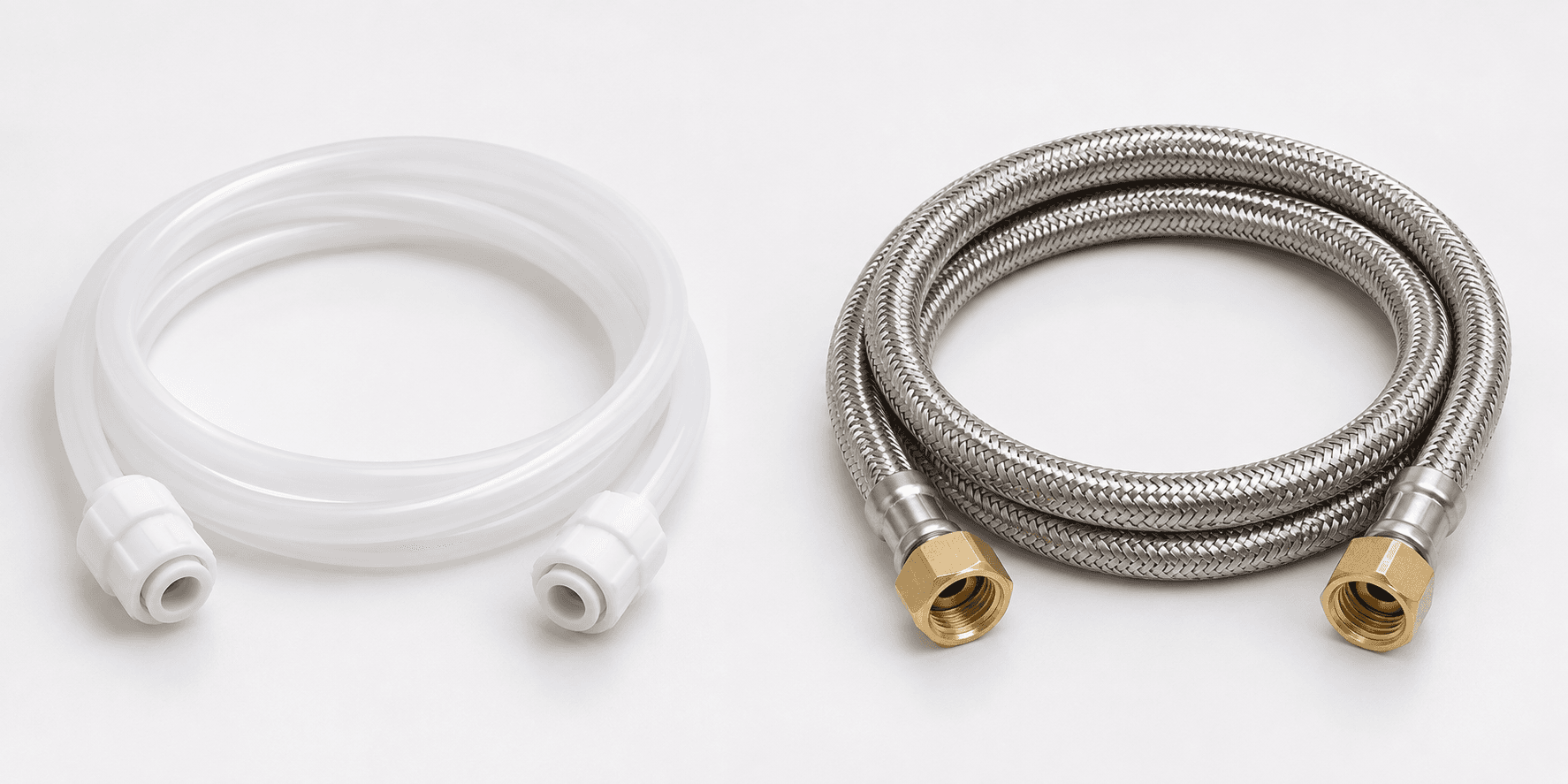
In our renovation work, Vitutti Construction has found a properly selected, braided flexible refrigerator water line a safer choice than a basic plastic tube when the refrigerator manufacturer allows that connection. This reflects our field experience. It is not a universal rule: water-line requirements vary by refrigerator model, so check the installation manual before changing the supplied line.
Why the line and connection matter
The supply line remains connected to household water pressure, and much of it may be hidden behind the refrigerator. A line that is incompatible, kinked, strained, or damaged can leak. A braided flexible line can be a practical option, but it must be rated for refrigerator water service and compatible with both the home shutoff valve and the refrigerator inlet.
Do not assume that any braided faucet connector will fit. Check the required diameter, fittings, length, and material in the appliance instructions. Some manufacturers approve specific plastic kits, while others specify copper or other approved tubing. For example, GE describes the tubing approved for its refrigerators, and Whirlpool provides model-specific guidance for acceptable connections.
Before connecting a replacement line
Confirm the refrigerator manual permits the line you plan to use. Use the correct refrigerator-rated line and fittings, and make sure the shutoff valve is accessible and in good condition. Leave enough slack to move the refrigerator out for service without pulling on the connection, while keeping the line clear of sharp edges and pinch points.
If the existing valve is corroded, hard to reach, or not working, have a qualified plumber assess it before connecting the appliance. Local plumbing requirements may also apply.
Check carefully after installation
After the line is connected, turn the water supply back on and inspect both ends of the line. Follow the refrigerator manual for flushing the line and operating the dispenser or ice maker. Check for moisture again after moving the refrigerator into place, and recheck the area later. If you find a leak, shut off the water and correct the connection before using the dispenser or ice maker.
For model-specific installation details, see GE Appliances’ refrigerator tubing guidance and Whirlpool’s water supply line instructions. Always follow the instructions for your exact refrigerator model.
Planning a kitchen renovation? Include the refrigerator water supply and shutoff location in the layout before cabinets and flooring are finished. Vitutti Construction works on kitchen renovation projects in New York City and Long Island.